Surveys that Work: An Introduction to the Survey Octopus and Total Survey Error

Many of us receive multiple requests to complete surveys every day. Some of us find that colleagues or clients think of ‘doing a survey’ as the same as ‘doing some research’ – which may explain why organizations send out so many survey requests. In this webinar, you’ll meet the Survey Octopus, Caroline Jarrett’s friendly way of talking about the many issues that make surveys one of the most challenging research methods. The Survey Octopus will help you to: Explain to colleagues that a survey may not be the first research method to try Help to justify a choice to work with a “non significant” number of responses Think about the steps that go into delivering a survey that works As …

Read more

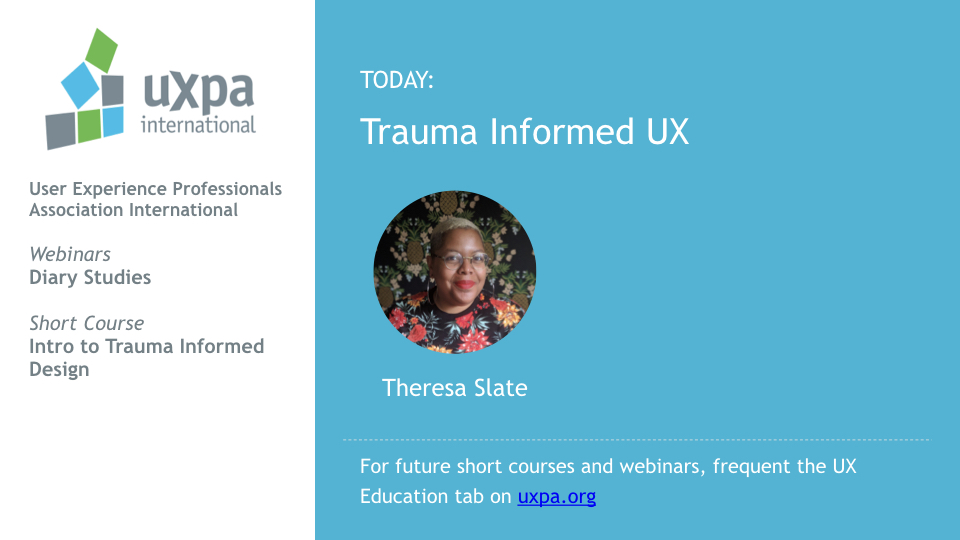
Intro to Trauma Informed Design

Every day we’re inundated with horrific videos and images of violence on our social media timelines. While most of us will remain unaffected, there is a large portion of the population who find themselves in the midst of a PTSD episode just browsing Facebook. With digital well being in its infancy, it is time for designers and technologists to look to health and wellness to learn about trauma informed care. Join interaction designer and rape survivor Theresa Slate as she introduces us to what Trauma Informed Design is and why it’s important.

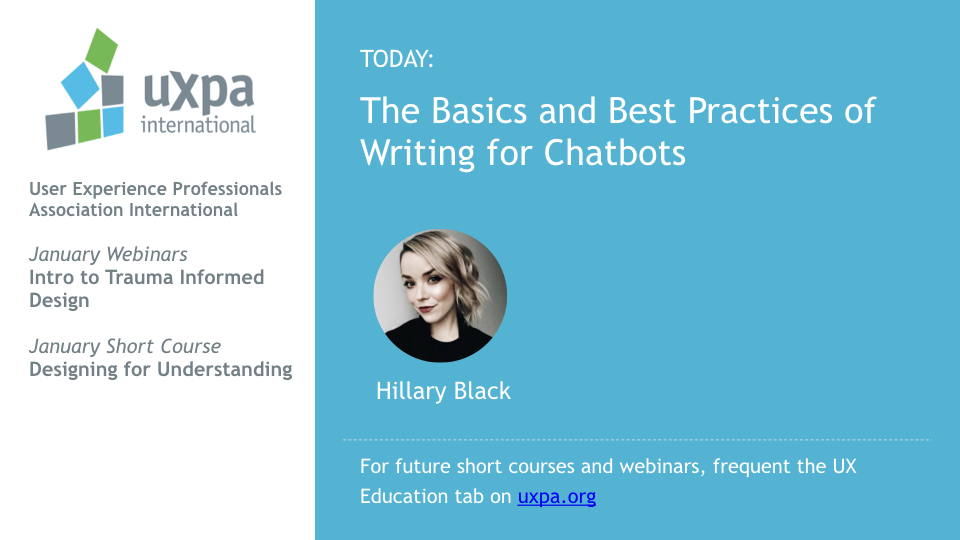
The Basics & Best Practices of Writing for Chatbots

The field of chatbots and conversational AI is skyrocketing, and the demand for people with conversation design skills is at an all time high. How can UX writers apply their knowledge to chatbots? What does a conversation designer do? What is the formula for an effective user experience? It’s time to find out! In this webinar you’ll learn all of the basics and best practices to design & write for chatbots – no matter your experience level. Hillary Black, a professional chatbot conversation designer, will give you a behind the scenes look at her strategic process, teach you her best practices for crafting dialog and share tips and tools along the way. You will find out how your UX writing …

Read more

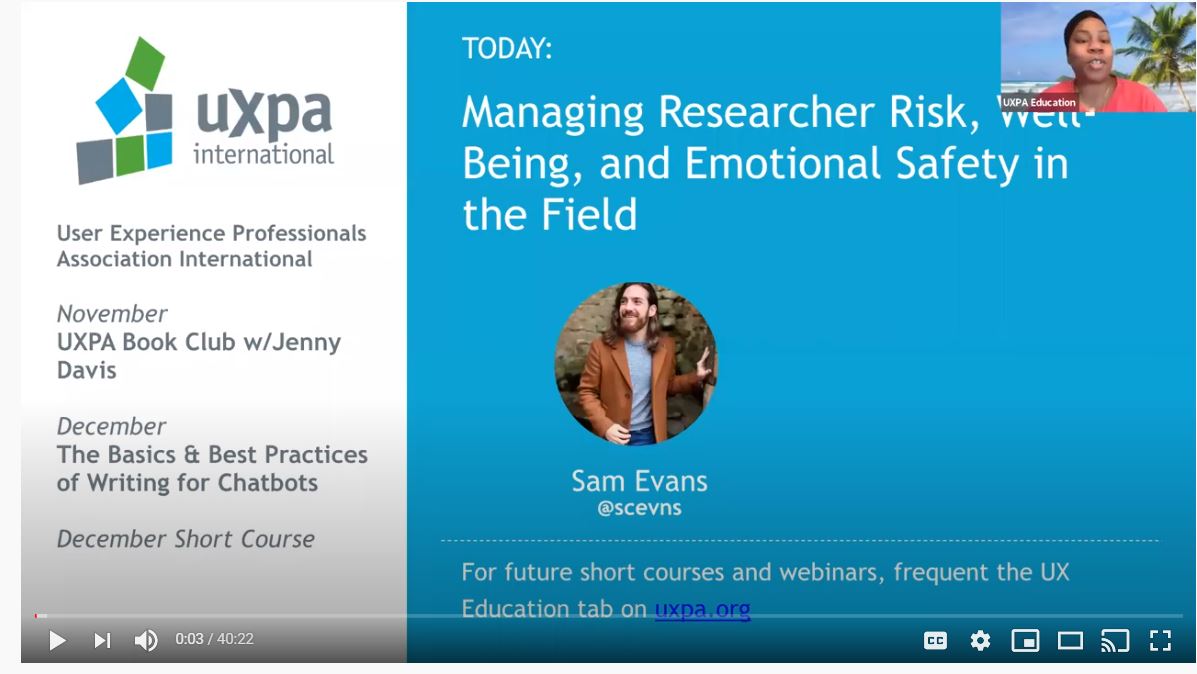
Managing Researcher Risk, Well-Being, and Emotional Safety in the Field

Presented by: Sam Evans What do you do if a participant makes an offensive or derogatory remark during a focus group? How do you handle a participant who makes a pass at you during an interview? What if a participant threatens you over an incentive or scheduling decision? As qualitative researchers, one of our primary roles is mitigating the risks faced by our participants, but oftentimes we forget to account for the personal risks we face while on the job. Although the instances above may be rare, interactions with humans, even in a controlled research environment, can be unpredictable, uncomfortable, and sometimes dangerous. In this webinar, we will talk through steps you can take to manage these situations and their …

Read more

Writing for the Web: The Six Step LUCID Writing Approach that Gets Your Message Across

There are more than 5 billion pages on the World Wide Web. Every day we send more than 300 billion emails, and 3 billion individuals access social media. Every web page, every email and every post is a message that we want to communicate to others. How do you design these messages, so you successfully get your point across? LUCID Writing is a six-step, user-centric approach that will strengthen your ability to communicate on the web. It’s based on principles of cognitive psychology and instructional design developed over the past 30 years. Following these steps and applying the principles will enable you to craft communications that fit the needs and expectations of your audience. Of course, not all communications have …

Read more

Item added to cart.
0 items - $0.00